30 June 2012

Choosing how to back up data


My choices at the moment are a couple of external disks with "live data", stuff I might need to access right away and a large number of DVD disks titled "portfolio 1, 2 etc" linked to a database (Filemaker) of info and images to help me search and find things. I've had this system for at least 10 years now and it's served me well enough but as files get bigger and storage space cheaper, it's time to re-think it all.

The advice I get is pretty all over the place. From, just keep doing like you have been, to get a tape system to have 3(!) copies of everything in various formats linked to a central server. Obviously, some people I know live in a world where they have tech support, money and other resources more readily available to them than I ever will. My needs are pretty modest overall, I just want an easily accessible way to save files and combine it with making more of my work, particularly photos, easier to access right away.

My first step will be to buy 2 internal terabyte drives to replace 2 smaller ones on my tower and then buy 2 additional external drives to match up with the internal ones. (I already have one big internal and external drive) My tower has 4 drives, one is a system drive for apps, fonts etc and that will stay exclusively for that. The other three will be one for video, one for work and one for play, essentially all my movies, music and personal stuff. I will then re-organize ALL my DVD back-ups on to the hard drives and make a copy on each external drive to match. The really hard time consuming thing will be to go through all that data and put it into a filemaker database. It took me 8 hours a day, 5 days a week for 3 months last time. I am also going to go through a step many people think of as unthinkable for some reason, dumping a lot of old work I've never looked at since it was done, including many photo shoots and getting rid of duplicate files. I know, "you never know you might need that one day", but you know... you can know in many cases and it's just pack ratting to keep every single thing you've ever done. If some client calls you out of the blue 20 years later for a copy of a project you are not obligated to have it waiting for them. If you can even open it still!

I could go the tape route, but that's an entirely new system and not practical for a small time designer like me, with hard drives I can plug them into a new computer or a laptop if need to to as well. The "cloud" is another option, but unlike a few friends who jump on everything new, I think the cloud is a very a bad idea and really impractical for video and other large files. I could never afford the bandwidth (we pay for usage here in Québec), not to mention my severe misgivings over privacy and having my data and life's work on some companies server. I have no desire to wait hours for a film project to download either just to get one clip for my demo reel.

As n most things, the most important thing to making a decision is not what's "best", there is no "best" way to do anything, just the best way for you to do something. In the case of back-up the number thing priority is just to do them!

23 May 2012

Legal Protections for Contract workers


Creative fields, like mine, are particularly susceptible to unscrupulous clients due to the nebulous nature of the jobs we do. With notable exceptions, practically everyone hiring out there severely undervalues the effort, training and business costs it takes to create stuff. This has been the case long since before computers came on the scene. Artists worked in sweatshops for dollars a day in greeting card companies while the images they made sold like hot cakes. These days we are often asked/forced to work for a set price on projects with poorly defined or ever changing parameters. This is not just poor planning but a way to milk dry the person hired to the point they will receive far below the minimum wage, if in fact, they get paid at all.

Large companies are no better than two bit operations in this sense. Marketing People are the worst of the lot in my experience. I can't tell you how annoying it is to be constantly flattered on how wonderful and innovative my work is knowing it is a sure sign they are about to screw me over. Often, I am asked to work for or close to free for a chance to bid on non existent "future projects".

It's easy to say "don't take the work" when you are receiving a regular check every week. Independent workers are, in a sense, always unemployed and are not eligible for government assistance, even though they pay into it. It can be months between projects and many times workers are quite literally starving from either lack of work or from being ripped off by clients. When possible, I don't send the finished files until the check is on the way and watermark or make otherwise in usable files until you are paid. Deadlines almost always make these tactics unworkable, but I try them with every job. Sometimes I have to stop working until at least partial payment arrives. This forces the client to at least give me at least something. I can demand a deposit, but it's rare to receive one.

The real problem is there are no rules or regulations that protect the contractor. None. Any job that ultimately pays less than minimum wage should be illegal and no one should wait more than a couple weeks for a check to be sent out after the work is completed. Long projects should require partial payments throughout. Some basic price structures should be set as well. There is no free market here, just a free ride for dishonest employers. Setting some basic guidelines for fairness would go a long way to ending the abuse presently considered acceptable business (but immoral) practice.

17 May 2012

New portrait


Once again digging into reference images I never got around to using. This time I've decided to try portraiture in pen and ink for the first time in a very long while. I've long been a fan of the stippling technique for skin tones in ink drawings... despite the fact it takes forever to accomplish. Thanks to Mike Luce for his feedback and critiques.

02 May 2012

The value of Digital VS Traditional Art


I won't presume to define what's art and what isn't but I think I can explain some important differences between paper and screen and how that effects how we all view the final product and particularly its value as art.

There is not much difference on how art is conceived, wether it's analog or digital. It takes ideas, planning, skill and practice to do both. Most renderings will require research and reference images as well as testing of techniques and styles. Tracing and blocking out reference images save time and insure proportions and perspective are correct. So in many ways, the final product is produced using the same skills and procedures. So then, what is the difference?

While the quality and concepts of the final image may be the same, the thing that makes something "art" may boil down to uniqueness and permanence. A digital piece, though beautiful, can be reproduced at will but does not have the advantage of being truly tactile. It can also be modified and changed at any time. A huge plus. Art on paper etc is given value not just from its beauty but by its uniqueness. There will only ever be one like it. It's impermanence is what gives it some of its value. It may last a long time, but probably not forever. Working with real world materials force decisions that can't be corrected later on and can lead to very different decisions during creation. So while digital images may be on par visually with traditional art, and have certain advantages over it in terms of reproduction and flexibility, the things that make traditional art so rare also give it a value digital art can't replicate.

What do you think?

24 April 2012

Jesse Owens on American Experience


I am hoping anyone reading this will watch American Experience on May 1st. yes it's a great documentary but my reasons are purely selfish I'm afraid to say. I did mega loads of work on this. Retouching and animating photos in 3D space, restoring and animating posters and magazine covers, recreating and restoring headlines... just tons of work. I haven't seen the final version yet so I don't know how much of my work is still in there but the shear volume says... it's a lot. If you look at the case and crew listing, I'm under "Graphics" with my partner on this project, Alton Christensen.

And please, feel free to tell me what you thought about it... good or bad.

Check your local PBS station for the time but it seems to be playing at 8 pm here and on the east coast.

Show description:
The most famous athlete of his time, his stunning triumph at the 1936 Olympic Games captivated the world even as it infuriated the Nazis. Despite the racial slurs he endured, Jesse Owens' grace and athleticism rallied crowds across the globe. But when the four-time Olympic gold medalist returned home, he could not even ride in the front of a bus. The story of the 22-year-old son of a sharecropper who triumphed over adversity to become a hero and world champion, Jesse Owens is also about the elusive, fleeting quality of fame and the way Americans idolize athletes when they suit our purpose, and forget them once they don't.

16 April 2012

Pen & Ink illustration

Trying to do more traditional artwork along with the more digital oriented work.


11 April 2012

Harness

A little digital painting from an old reference photo I took about 12 years ago and never used. Getting closer to doing a face... not confident enough yet.


10 April 2012

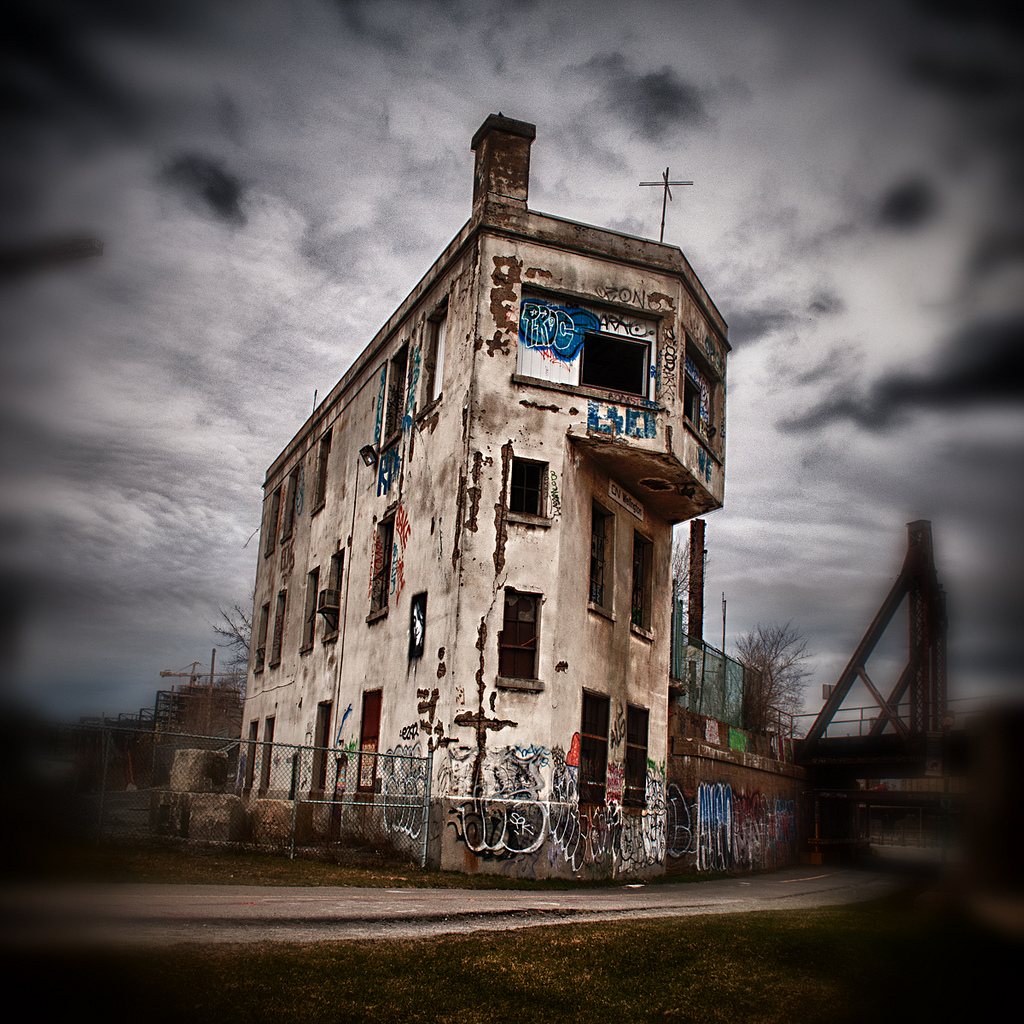
Spring has arrived. The sure signs... Cirque du Soleil at the old port, surfers on the Saint Lawrence. Plus more HDR along the piste cyclable.

01 April 2012

30 Years of Behemoth media


2012 marks the 30th anniversary of Behemoth media. What started as the name (Behemoth Productions) for super8 productions made by myself and partner in crime Jeannette Reeves merged with my graphic design business to become Behemoth media in the 90's and continues to this day. I expanded into more post production and animations after the year 2000 along with leaving film behind for a digital workflow.

After making several test films and playing around with my Bell & Howell super 8 movie camera (oh how I still miss it) I took a film editing class from ”the Jamaica Plain Newsreel” who were a small group making super 8 documentaries in the Boston area. My first project was called ”Different Drummer”. The simple concept was to film my good friend at the time, writer Stephen Merritt, and put the footage to music. I used a song he chose, ”Watching and Waiting” by the his favorite band, The Moody Blues. It was fairly well received in class. I have no idea where Stephen is today, but I still appreciate him letting me film him and show it. He was a geek before it was chic, like many of my friends, and I think the film shows this and his love of solitary activities like reading, writing and walking in the nature.

I've retooled the old dragon logo and I like it so much I think I'll be using a modified version on future productions from now on. It seems more ”film oriented” and the love of story telling through film and illustration is what's kept me doing this stuff for 30 years.

27 March 2012

Second painting attempt


paint what you love...
I should take a break before I get too obsessed (and disappointed) with my attempts. I want to do a pen and ink on real paper next anyway. Click to see more details in the digital painting.